How to Insulate a Building and How Much Does It Cost?
To improve the comfort of a building and reduce its operating costs, proper thermal insulation is essential. Insulating a building reduces its energy demand, helping to lower both heating and cooling bills. The key is to choose high-quality insulation materials and ensure professional installation by experienced specialists. This helps create durable thermal insulation and prevents the formation of thermal bridges.
What Types of Building Insulation Are Available?
Different insulation materials can be used for various parts of a building, including the attic, floors and walls. These materials differ primarily in their thermal conductivity, installation methods, ease of processing and price.
The most common building insulation materials include:
- Expanded polystyrene (EPS)
- Mineral wool
- Extruded polystyrene (XPS)
- Polyurethane foam
- PIR insulation boards
PIR Insulation Boards – An Advanced Form of Polyurethane Insulation
PIR insulation boards are considered one of the most effective solutions for insulating buildings, thanks to their excellent thermal insulation properties.
They are lightweight and offer low water absorption as well as good resistance to elevated temperatures.
PIR boards are available in various types and can be used in many different applications.
They are characterised by high compressive strength, excellent durability and resistance to many chemical and biological factors.
PIR insulation also offers favourable fire performance compared with conventional polyurethane insulation, although its specific fire classification depends on the product and application.
These boards are resistant to various environmental conditions and can be installed throughout the year, provided that the manufacturer’s installation requirements are met.
What Are the Main Properties of PIR Insulation Boards?
Modern polyisocyanurate (PIR) insulation boards can provide almost twice the thermal insulation performance of some conventional EPS and mineral wool products at the same thickness, depending on the thermal conductivity of the materials being compared.
They offer resistance to various organic and inorganic factors.
PIR boards are characterised by low capillary activity and low water absorption, making them suitable for a wide range of insulation applications.
They are also highly durable and can retain their thermal insulation properties for many years.
PIR insulation is resistant to mould and fungal growth under appropriate installation and operating conditions.
Properly installed boards can also help limit access by insects and rodents, although additional protective measures may be required.
Where Can PIR Insulation Boards Be Used?
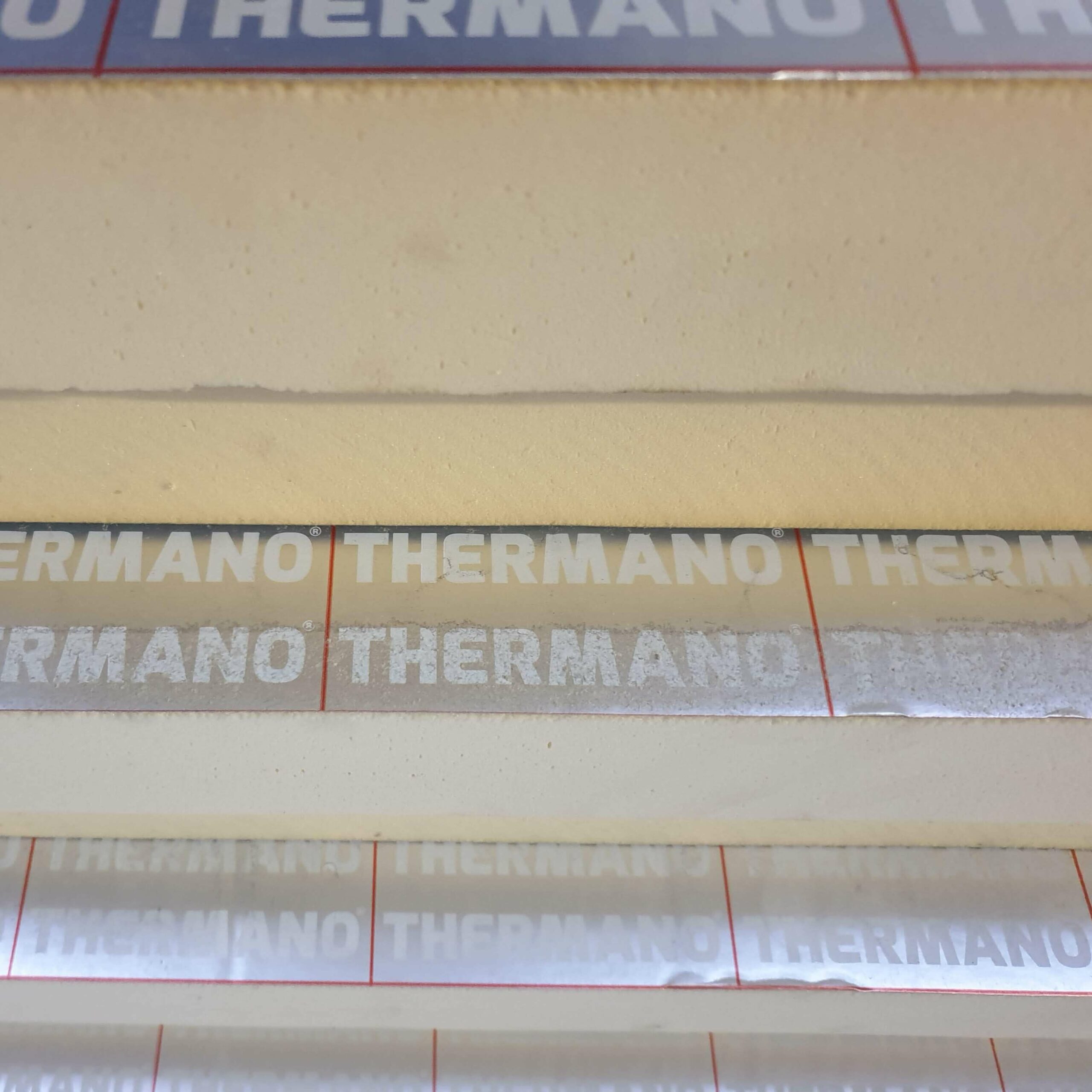
Thermano and termPIR insulation boards offer a wide range of applications in residential, commercial and industrial buildings.
They are suitable for insulating:
- Flat roofs and terraces
- External walls and partition walls
- Internal wall surfaces
- Attics and loft spaces
- Ground floors
- Suspended ceilings
- Basement walls
- Foundation walls
- Pitched roofs
- Prefabricated building elements and walls
High-quality PIR thermal insulation can be used in both new construction projects and building renovation or thermal modernisation work.
The appropriate PIR board type should always be selected according to the intended application and the manufacturer’s technical specifications.
What Affects the Cost of Insulating a Building?
The cost of building insulation depends largely on the type of material selected.
Before starting an investment, it is worth carefully assessing which insulation solution will be the most cost-effective and energy-efficient.
One of the main factors influencing the total cost is the size of the building.
The larger the surface area requiring insulation, the greater the quantity of materials needed.
The technical condition of the building is also important.
Insulation materials should be installed on a properly prepared surface, free from cracks, cavities and other defects that could affect installation quality.
Although DIY insulation can help reduce expenses, professional installation is generally recommended.
Labour costs depend on the contractor’s experience, the region and the scope of the work.
How Much Does Attic Insulation Cost Using Different Materials?
The following prices are indicative amounts in Polish złoty (PLN) quoted in the original article. They should not be treated as current market quotations.
- Expanded polystyrene (EPS) – One of the more affordable insulation solutions. In addition to EPS boards, adhesive mortar and reinforcing mesh may be required, depending on the insulation system. The estimated material cost can reach approximately PLN 40/m², excluding labour.
- Mineral wool – Insulating a roof with mineral wool may cost approximately PLN 10–20/m² for insulation layers several centimetres thick. Thicker mineral wool insulation may cost around PLN 20–30/m². A vapour control layer should also be included in the budget, with an estimated cost of PLN 2–10/m².
- Spray polyurethane foam – Spray foam insulation is a popular solution, although it is generally more expensive, with estimated costs of PLN 50–150/m². The quality of the installation depends on the applied foam thickness, density, material properties and workmanship. With open-cell foam, it is particularly important to verify the application parameters and long-term performance.
- Cellulose insulation – Cellulose is another material used for insulating buildings. Its estimated cost is approximately PLN 20–70/m².
- PIR insulation boards – Insulation using PIR boards may cost approximately PLN 10–180/m², depending on the insulation thickness and whether first-grade or second-grade boards are selected.
When comparing insulation materials, it is important to consider not only the price per square metre but also thermal performance, required thickness, installation costs and long-term durability.