Types of Roofing Materials – Which Roof Covering Should You Choose?
Are you wondering which materials would be best for your roof? Not sure where to start looking? Take a look at our short guide to the most popular roofing materials.
Today, roofs can be covered with many different materials, including bitumen shingles, bituminous roofing felt, corrugated fibre cement sheets, ceramic roof tiles, natural slate, wooden shingles, wooden shakes and even thatch.
However, some of the most popular roofing solutions currently available include metal roof tiles, standing seam metal roofing and asbestos-free corrugated fibre cement sheets, such as Ekofala (an environmentally friendly alternative to traditional asbestos cement roofing).
Metal Roof Tile Roofing
Metal roof tiles are single-row or multi-row metal sheets with embossed profiles, usually designed to resemble traditional Dutch-style roof tiles.
They have been available on the Polish market for several decades. When properly installed, the joints between individual metal roof tile sheets are virtually invisible.
Metal roof tiles are among the most popular and affordable roofing materials. They combine the strength and durability of steel sheets with the elegant appearance of traditional roof tiles.
One of their greatest advantages is their relatively low weight compared with many other roofing materials.
The expected service life of metal roof tiles is generally several decades, depending on the material, protective coating, installation quality and maintenance.
Metal roof tiles provide excellent weather resistance when correctly installed. Certain systems can also be used on roofs with relatively low pitches, provided that the manufacturer’s minimum roof pitch requirements are met.
Various metal and plastic accessories are used to finish the roof covering and achieve an attractive appearance. However, these additional components can increase the overall cost of roof installation.
Standing Seam Metal Roofing
The standing seam roofing method is one of the oldest roofing technologies, developed and refined over centuries.
Standing seam roofing uses flat metal sheets installed over solid or appropriately designed open roof decking.
The metal sheets are joined using different seam types.
Transverse joints may be formed using:
- Single flat seams
- Double flat seams
Longitudinal joints may include:
- Single standing seams
- Double standing seams
- Angled standing seams
- Hollow roll joints
- Belgian batten seams
- Pentagonal batten seams
The double standing seam is one of the most commonly used joining methods. However, the choice of longitudinal joint depends largely on the roof pitch and the requirements of the roofing system.
Standing seam roofing is highly durable and particularly suitable for large roof surfaces. It can also be a cost-effective solution over the long term.
Roofs covered with standing seam metal sheets offer excellent resistance to rain and strong winds when properly designed and installed.
Standing seam metal roofing combines a classic appearance with a simple, elegant design.
This makes it an excellent choice for modern residential buildings, houses inspired by traditional architecture and historic buildings.
A wide selection of metals, colours and seam spacing options allows the roof covering to be adapted to the architectural style of the building.
Click-Lock Standing Seam Panels
Modern roofs can also be covered with click-lock standing seam panels, which are installed using a specially designed snap-lock connection system.
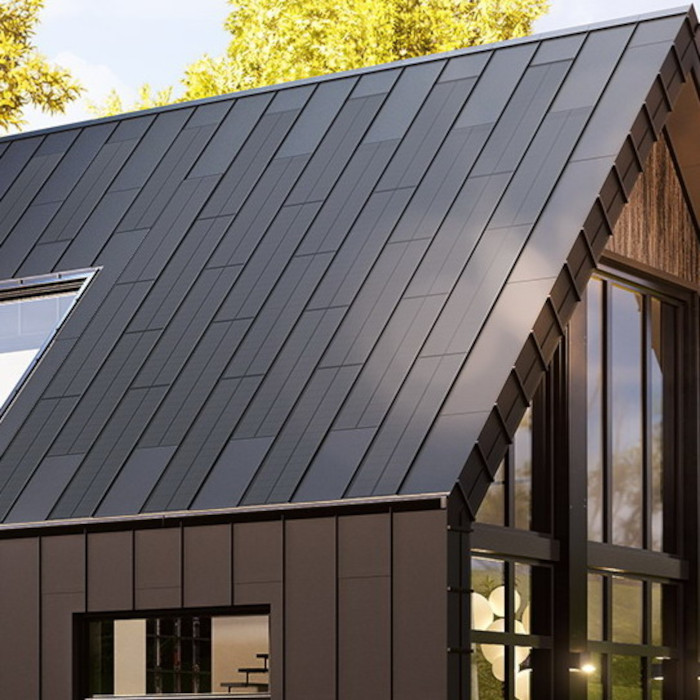
In addition to traditional standing seam panels, our product range also includes the SOLROOF photovoltaic roofing system, in which selected standing seam panels are active photovoltaic modules that generate electricity.
This solution combines an attractive metal roof covering with solar power generation.
Corrugated Fibre Cement Roofing – Eurofala / Ekofala
Eurofala (Ekofala) is a modern, environmentally oriented corrugated fibre cement roofing material that contains no asbestos.
The sheets are manufactured using materials such as:
- Cement
- Water
- Limestone powder
- Cellulose fibres
- Reinforcing fibres
Fibre cement is a durable and strong material with excellent corrosion resistance.
Unlike steel sheets, it does not rust. It also offers resistance to various chemical compounds, including substances with acidic or alkaline properties.
Fibre cement is non-combustible and can provide good thermal performance and acoustic comfort, helping to reduce the noise caused by rainfall.
Other advantages of corrugated fibre cement sheets include their relatively low weight and low maintenance requirements.
Thanks to their large dimensions, the sheets can be installed efficiently, helping to reduce installation costs.
Ekofala is an excellent roofing material for industrial buildings, agricultural facilities, warehouses and other commercial structures.
Corrugated fibre cement roofing can also be installed on roofs with relatively low pitches, subject to the manufacturer’s installation requirements.
Additionally, fibre cement sheets can be used as facade cladding.
Roofing Materials Available Immediately at ASPanel
If you need professional advice or would like to purchase high-quality roofing materials, we invite you to contact ASPanel.
At our locations in Miszewko, Elbląg and Słupsk, we offer a wide selection of roofing materials, including:
- Metal roof tiles
- Standing seam metal roofing sheets and panels
- Eurofala / Ekofala corrugated fibre cement sheets
Many products are available immediately from stock, so you do not have to wait for a production order.
With a wide range of roofing materials available at our locations, you can find the products and accessories needed for your project.
Contact ASPanel today to check availability, colours, dimensions and prices. Our team will help you choose the right roofing solution for your building!